
‘Greening your home’ has been a hot topic of late, thanks to the Green Homes Grant. And now that many of us are spending more time at home (working or otherwise), we’re more aware of our energy use than ever before.
This series of blog posts is designed to show you how energy-efficient home improvements don’t have to cost you a pretty penny. Read more on how you can save money and energy in your home for free or on the cheap with CREW! This week, in the kitchen…
Rustle up some energy savings
There are lots of day-to-day energy-saving habits you can adopt in the kitchen, starting with how you prepare meals: time to cook smarter, not harder.
Firstly, one of the most basic things to know, according to uSwitch, is that a microwave is the most energy-efficient appliance, followed by a hob and lastly an oven. But there still are a few tricks you can use to maximise each option!
Below are some easy, energy- and money-saving swaps you can make for FREE
Microwave
- Use the microwave to heat a small amount of food, rather than a gas or electric hob – According to Energy Saving Trust, five minutes’ usage of a typical microwave (800W, category E) will use about 0.09kWh of electricity, costing around 1.3p. In comparison the typical gas consumption each time a gas hob is used is about 0.9kWh, costing around 3.4p.
- Keep your microwave clean so that only your food is being heated, not leftover splashes!
Hob
- Boil the kettle instead of leaving water to boil in a pan – this is much more efficient, and (if you use a gas hob) uses less CO2.
- When boiling the kettle, only use as much water as is needed to cover the amount of food you’re cooking, this means the kettle will be on for a shorter period of time, using less electricity.
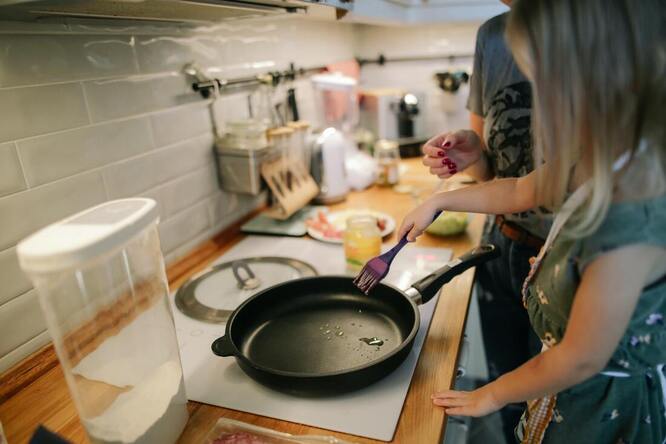
- Put lids on your pans and use the right-sized hob ring to avoid wasting heat.
- Keep your induction hob surface clean- any food that sticks to the ring will absorb heat, making it less efficient.
Oven
- If you have a dish that needs to go in the oven, plan ahead and cook additional meals at the same time: that way you can cook two or three meals using the same amount of energy you would normally use for one!
- Use glass or ceramic dishes in the oven – they retain heat better than metal dishes, meaning they can cook more efficiently.
- Switch your oven off early – a good quality oven will retain the heat you need to cook your dishes for up to ten minutes after you switch it off, thereby reducing your energy use.
Slow and cold
- Slow cookers are also an energy-efficient cooking appliance – they use just a little more energy than a traditional light bulb.
- Defrost frozen food in the fridge overnight rather than in the microwave just before you cook – defrosting food in advance not only typically halves the cooking time but also means that you save the energy you would have used in the microwave – you just need to remember to take the food out of the freezer well before you need it!
We’ll be back soon with more inexpensive energy saving tips to help make every home a green home! Next time: water and washing.
Are you trying to save energy use in your home but struggling to find areas for improvement? Some swaps are simpler than you think. Leave a comment and we will do our best to get you the answers you need!